
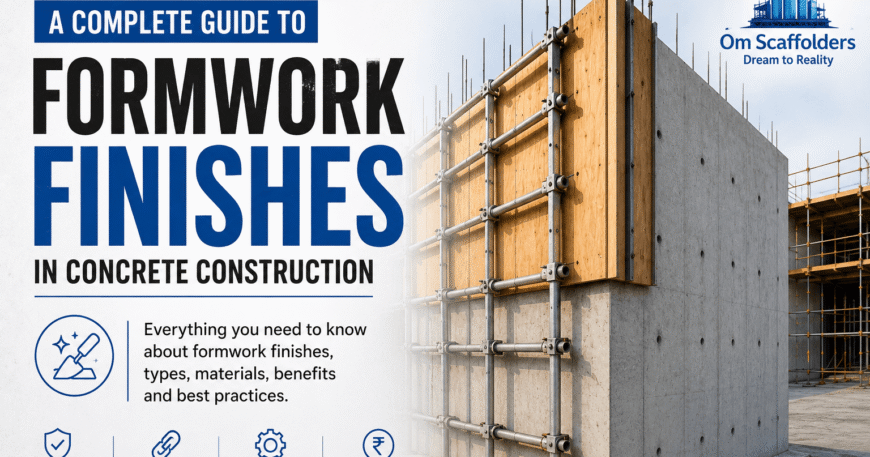
Poor formwork finishes don’t just spoil the look of a structure, they lead to expensive repairs, delayed handovers, and quality complaints from clients. Whether you’re working on a residential tower, an industrial shed, or a bridge deck, the formwork system you choose decides how the final concrete surface turns out. This guide from Om Scaffolders walks you through the finishes available, what causes defects, and how to avoid them on site.
Why Formwork Finish Actually Matters
A clean finish isn’t just cosmetic. It cuts down on plaster and putty costs, reduces the risk of water seepage through surface cracks, and saves painting rework later. For exposed concrete work, a poor finish can mean re-pouring an entire section at a cost and delay no project manager wants to explain. Getting the finish right the first time protects your budget, your timeline, and your client’s trust.
Types of Formwork Finishes
Smooth finish suits residential and commercial slabs where plaster or paint will follow. It’s fast and cost-effective, though it needs well-maintained plywood shuttering to avoid marks.
Textured finish is used where grip or a decorative surface is needed, such as walkways, but requires specialised formwork panels.
Fair-faced concrete leaves the structural surface exposed with no plaster at all ideal for architectural buildings, but unforgiving of any shuttering defect.
Architectural finish targets a designed visual pattern, common in facades, and demands precise panel alignment.
Exposed aggregate finish reveals the stone within the concrete for a decorative look, popular in landscaping and pavements.
Pattern finish uses moulded liners to create brick, stone, or custom textures directly in the concrete, saving on additional cladding.
Each option comes with a trade-off between cost, formwork quality required, and finish precision — matching the right one to your project avoids both overspending and underdelivering.
Biggest Factors Affecting Finish Quality
Getting a clean pour depends on more than the formwork material alone. Plywood quality and steel formwork condition directly affect surface smoothness damaged or worn panels transfer every flaw onto the concrete. The release agent must be applied evenly; too much causes surface staining, too little causes sticking and tearing on removal.
Vibration, the water-cement ratio, and overall concrete mix design control how well the mix fills corners and avoids voids. Pouring too fast increases the chance of trapped air. Weather and temperature affect curing time and setting speed, especially in extreme heat or cold. Finally, formwork alignment, tight joint sealing, and routine formwork cleaning and maintenance are what separate a consistently good finish from one that varies pour to pour.
Real Site Mistakes That Cause Poor Finishes
Most defects trace back to avoidable errors: dirty shuttering reused without cleaning, damaged plywood patched instead of replaced, excess release oil, insufficient vibration during pouring, leaking joints between panels, misaligned panels at corners, and stripping the shuttering before the concrete has properly cured. Each of these is preventable with a basic site checklist and disciplined handling of your shuttering and scaffolding equipment.
Common Concrete Defects and How to Prevent Them
Honeycombing happens when the mix doesn’t fill around reinforcement properly, usually from poor vibration or an overly stiff mix. Blowholes and surface voids form from trapped air, often from fast pouring or an unclean release agent application. Bug holes are small surface pits caused by trapped air bubbles against the formwork face. Cracks and cold joints typically result from delayed pours or improper curing. Discoloration can come from inconsistent cement batches or uneven curing conditions. Preventing these comes down to controlled pouring speed, proper compaction, and formwork that’s clean, sound, and well-aligned before concrete goes in.
Best Formwork Materials Compared
Steel formwork offers high reusability and a smooth finish but costs more upfront. Aluminium is lighter and speeds up handling on multi-storey projects. Timber formwork is economical for small or one-off jobs but wears out faster. Film-faced plywood balances cost and finish quality for most mid-sized projects. Modular systems reduce labour time significantly on repetitive floor plans. The right pick depends on your project scale, budget, and how many reuse cycles you expect.
Practical Tips From Experienced Contractors
Clean formwork thoroughly after every use. Apply a release agent in a thin, even coat. Inspect panel joints and alignment before every single pour. Replace damaged plywood immediately rather than patching it. Don’t rush shutter removal, premature stripping is one of the most common causes of surface damage.
Rent or Buy: What Makes Sense for Your Project
For short-term or one-off projects, renting avoids tying up capital in equipment you’ll use once. For ongoing work, buying may offer better long-term value, provided storage and maintenance are in place. Many contractors handling variable project loads rely on scaffolding rental in Ambala and nearby industrial belts to stay flexible without owning a full equipment inventory.
Conclusion
Consistent formwork finishes come down to planning, material quality, and disciplined site practices not shortcuts. Choosing the right finish type, maintaining your shuttering, and following a proper quality checklist at every stage saves far more in repair costs than it costs to do right the first time. For contractors looking for dependable shuttering & formwork solutions, working with an experienced partner like Om Scaffolders makes it easier to get consistent results project after project. Whether you’re sourcing formwork panels or exploring scaffolding rental in Ambala for an upcoming site, Om Scaffolders brings the equipment reliability and technical know-how to help you avoid costly finish defects and stay on schedule.