

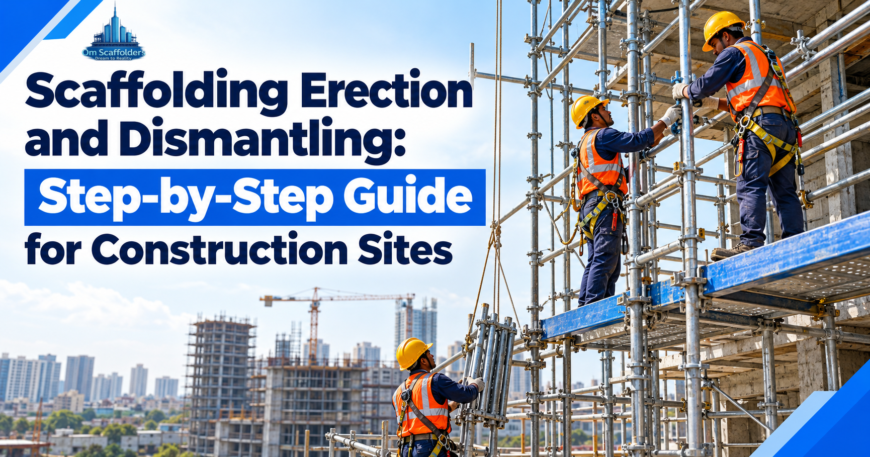
Scaffolding plays an important role in construction projects, providing temporary access and working platforms for activities such as plastering, painting, masonry and building maintenance. However, scaffolding must be erected, inspected and dismantled carefully to maintain site safety and work efficiency.
Whether you are managing a residential building, a commercial project or an industrial site, understanding the scaffolding erection and dismantling process helps you coordinate workers, materials and construction schedules more effectively.
OM Scaffolders provides scaffolding rental and construction support materials for different project requirements, including cuplock scaffolding, vertical standards, horizontal ledgers, Base Jacks and U Jacks.
This guide covers the importance of scaffolding erection and dismantling, the main stages involved, essential safety considerations and how to choose suitable scaffolding rental solutions for construction projects.
What Is Scaffolding Erection and Dismantling?
Scaffolding erection is the process of assembling a temporary structure using components such as standards, ledgers, braces, platforms and base supports. Dismantling involves removing these components in a planned sequence after the scaffolding is no longer required.
Both activities should be carried out by trained personnel under competent supervision, following the manufacturer’s instructions, the approved scaffold design where required, and applicable safety regulations.
Step-by-Step Scaffolding Erection Process
1. Inspect and Prepare the Site
Before erection begins, assess the ground conditions, available working space, nearby structures and overhead hazards. The supporting surface must be suitable for the intended loads. Plan access routes and establish appropriate exclusion zones.
2. Check Scaffolding Materials
Inspect the scaffolding components for visible damage, deformation, corrosion and missing connections. Damaged or unsuitable components should not be used. Confirm that the materials match the intended scaffold configuration and project requirements.
3. Install the Base Supports
Prepare the foundation and position suitable base plates or Base Jacks as specified in the scaffold design. The supports must rest on an appropriate surface and be properly levelled. Do not use improvised materials to compensate for unstable ground.
4. Assemble the Scaffold Structure
Trained personnel should install the vertical standards, horizontal ledgers, braces and other components according to the manufacturer’s instructions and approved design. For cuplock scaffolding, the locking connections must be correctly engaged and secured.
Platforms, guardrails, toe boards, access ladders and other protective measures should be installed as required by the scaffold design and applicable safety standards.
Learn More About Cuplock Scaffolding
Cuplock scaffolding is commonly used for construction projects because of its modular design, strong connections and straightforward assembly process. Understanding its components can help contractors select a suitable system for their site requirements. Explore our cuplock scaffolding system to learn more about its components and applications.
5. Inspect Before Use
A competent person should inspect the completed scaffold before it is put into service. Check stability, connections, access, platforms, edge protection and compliance with the intended loading requirements. Do not use the scaffold until it has been confirmed safe for use.
Step-by-Step Scaffolding Dismantling Process
1. Confirm the Scaffold Is No Longer Required
Coordinate with the site supervisor and ensure that workers, tools and construction materials have been removed from the scaffold. Establish an exclusion zone to prevent unauthorised access.
2. Remove Components in a Planned Sequence
Dismantling should follow a planned sequence consistent with the scaffold design and the manufacturer’s instructions. Components should be removed progressively without destabilising the remaining structure.
3. Maintain Protection and Stability
Do not remove braces, guardrails or other stabilising components prematurely if doing so could expose workers to falls or make the scaffold unstable. Workers must use appropriate fall-protection measures throughout the process.
4. Sort and Inspect Materials
Lower components safely rather than throwing them to the ground. Separate damaged items from serviceable materials, count the returned components and arrange suitable storage or transportation.
Why Proper Erection and Dismantling Matter
Incorrect scaffolding practices can lead to falls, structural instability, falling objects, injuries and project delays. Proper planning, competent supervision, suitable materials and regular inspections help control these risks.
Construction teams should follow applicable Indian safety requirements, site procedures and manufacturer guidance. Scaffolding should also be reinspected after relevant alterations, damage or adverse weather conditions.
Related Construction Support Materials
Scaffolding is also widely used to support shuttering and formwork operations during concrete construction. Suitable support systems help maintain stability while slabs, beams and other structural elements are being cast. Explore our shuttering and formwork solutions for different construction requirements.
Why Choose OM Scaffolders?
OM Scaffolders provides scaffolding rental and construction support materials for residential, commercial, industrial and infrastructure projects. Our range includes cuplock scaffolding, vertical standards, horizontal ledgers, Base Jacks, U Jacks, MS Pipes, MS Plates and other essential components.
Whether your project requires scaffolding for a short period or an extended construction schedule, our team can help you discuss your material requirements and rental arrangements.
Contractors can explore our scaffolding rental solutions for different construction and industrial project requirements.
Conclusion
Proper scaffolding erection and dismantling are essential for maintaining safer construction sites and efficient project operations. From site preparation and component inspection to controlled assembly, inspection before use and planned dismantling, every stage requires trained personnel and careful coordination.
Planning a construction project and looking for scaffolding on rent? Contact OM Scaffolders to discuss your scaffolding and shuttering material requirements.
Frequently Asked Questions
Who should erect and dismantle scaffolding?
Scaffolding should be handled by trained personnel under competent supervision, following the approved design and applicable safety requirements.
When should scaffolding be inspected?
Inspect scaffolding before use and at the intervals required by applicable regulations and site procedures. Additional inspections may be necessary after alterations, damage or adverse weather.
Can scaffolding be dismantled while workers are using it?
No. The area and work sequence must be controlled so that workers are not exposed to hazards created by dismantling. Unauthorised access should be prevented.
What materials are commonly used in cuplock scaffolding?
Common components include vertical standards, horizontal ledgers, base supports, braces and suitable working platforms, depending on the design.
Can I rent scaffolding materials for my construction project?
Yes, rental may be available depending on the supplier, material requirements, location and agreed rental terms. Confirm availability and transportation arrangements before booking.