

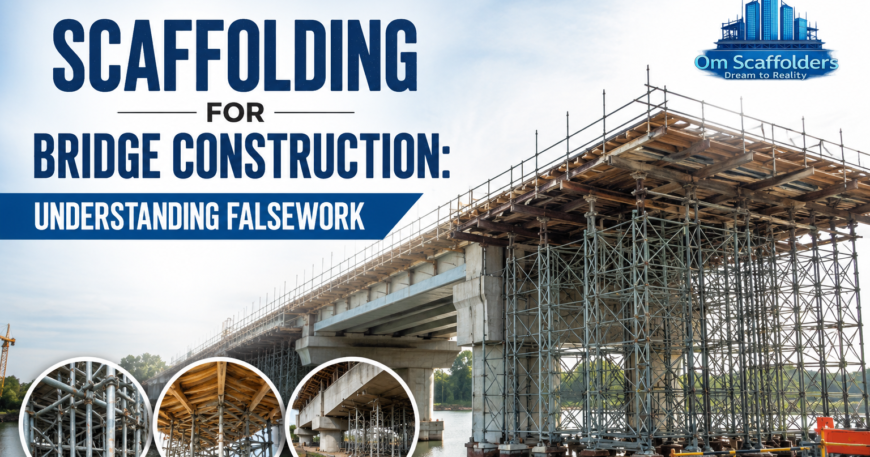
A bridge project can easily fall behind schedule due to temporary support systems that are built too late or do not correspond to the actual site circumstances. The installation may be complicated by uneven ground, high structural loads, traffic constraints and poor access under the bridge. Contractors can incur extra expenditures in labour, delays in equipment and safety issues where falsework arrangements are subject to periodic changes.
Scaffolding for bridge construction must be well planned and have good access and support. This handbook is intended to help contractors, builders, engineers, project managers and procurement teams to make informed decisions on the selection, rental or sourcing of scaffolding and falsework for bridge projects.
Learn the function of falsework in building
Falsework in construction is an interim supporting structure used during the construction of permanent structures. For bridge projects, it can support formwork and structural members during concrete pouring or until the permanent structure reaches the requisite state.
The temporary support system must be adequate for the loads planned and the construction stages. Project teams should not approach falsework as a normal scaffold configuration. Bridge projects often entail complex loading conditions and site-specific engineering needs.
When getting quotations, be specific about whether you need access scaffolding, temporary support, formwork support or a combination of these. This helps providers develop a suitable commercial proposal and minimises uncertainty on scope of supply.
Choosing a Supplier for Bridge and Overpass Projects
Bridge constructions generally have tight schedules and limited work windows. Suppliers should be assessed on their capacity to provide materials on time and facilitate changes in site requirements.
When comparing bridge and overpass scaffolding solutions, make careful to ask for a detailed description of what is included in the quote. Agree material requirements, supply times, erection support, plans for deconstruction and inspection responsibilities.
Also helpful is a discussion of how the supplier handles additional material requirements. Construction conditions can vary and a delay in receiving extra parts can affect the vital path of the project.
Common Errors That Drive Up Bridge Project Costs
One of the most common mistakes is to order equipment before the sequencing of work has been established. This can mean more materials staying on site or repetitive installation and disassembly.
Coordination of the scaffolding for overpasses with traffic and nearby infrastructure is especially critical. The project program should incorporate periods of restricted access to prevent scaffold erection from disrupting other key tasks.
Better temporary works planning can reduce costs
Proper planning, before mobilisation, is the best way to save money. Look at the bridge construction sequence and see when temporary support is actually needed and when it can be withdrawn.
Getting a supplier on board, such as Om Scaffolders, early in the planning process can allow procurement and project teams to discuss practical choices for materials, site logistics and access requirements before concluding the relationship.
Conclusion
Scaffolding for bridge construction must be more than just picking what is available. Project teams should understand the objective of the temporary structure, assess the site and load requirements and select suppliers who can fulfil the anticipated schedule.
Provide thorough project information, specify if access scaffolding or falsework is needed and check the total scope of the supplier’s proposal before rental or purchase. Set up explicit inspection and change procedures right from the outset.
By planning temporary works at an early stage, and making decisions based on project value, not just price, contractors can reduce delays and have more control over costs, while maintaining safer working conditions throughout the bridge construction process. Get falsework scaffolding support for your bridge project from Om Scaffolders.
FAQs
Q: What is the difference between falsework and scaffolding in bridge building?
A: Scaffolding is mostly for worker access. Falsework is a temporary support system for a construction that supports the loads until the final structure can support itself.
Q: Can falsework be rented for bridge construction?
A: Yes, contractors may lease support, and can obtain equipment for the duration of a project, depending on the provider and technical requirements.
Q: How do I select a scaffolding supplier for a bridge project?
A: Compare availability of material, project assistance, delivery capability, equipment condition, technical understanding and the full spectrum of what is given.
Q: What to verify before utilising bridge scaffolding or falsework?
A: Foundations, bracing, connections, load requirements, material condition, access arrangements, and the inspection methods required for the project.