
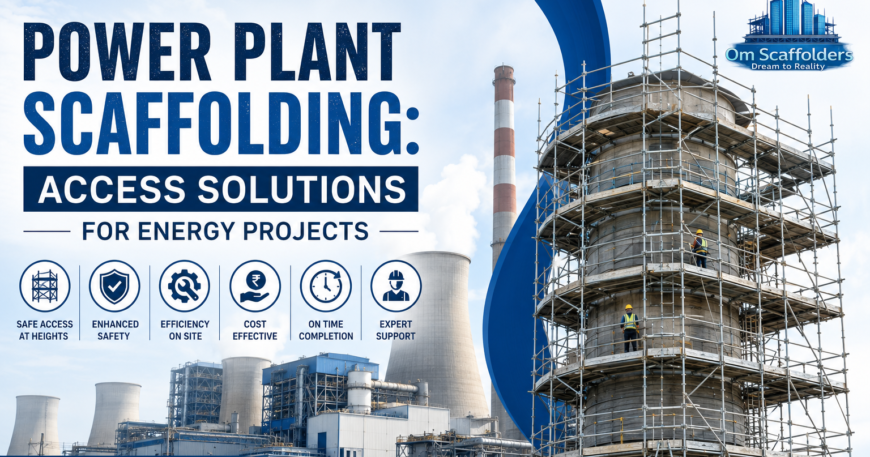
Power plants are some of the most demanding environments a scaffolding crew will ever work in. Tall structures, tight clearances, extreme heat, and equipment that can’t be switched off for weeks all come together on a single site. In this setting, power plant scaffolding isn’t just a support structure – it’s what allows engineers and technicians to reach boilers, turbines, and chimneys safely.
Whether it’s a routine inspection, an annual shutdown, or a full construction phase, safe access keeps a project moving. Miss it, and even a simple maintenance job can turn into a safety incident or a costly delay. Power plants also bring challenges most sites never face – live equipment nearby, restricted movement zones, and shutdown windows that can’t slip without cascading cost implications.
This article looks at what power plant scaffolding involves, where it’s used, and what to check before bringing in a partner for power and energy project support.
What Is Power Plant Scaffolding?
Power plant scaffolding refers to temporary access structures built for the maintenance, repair, inspection, and construction needs of energy facilities. Unlike scaffolding on a typical building site, it has to work around live machinery, irregular layouts, and hard-to-reach areas.
This type supports several kinds of power generation facilities, including thermal, nuclear, hydro, biomass, and gas-based plants, along with renewable installations such as solar and wind support infrastructure. Each environment has its own access challenges, but the goal stays the same – a stable, safe platform without disrupting operations more than necessary.
Why Power Plants Require Specialized Scaffolding Solutions
A typical power plant layout is nothing like a residential or commercial site. Boilers, turbines, chimneys, cooling towers, and pipe racks sit at significant heights, often packed close together with limited room to manoeuvre – and generic scaffolding setups don’t always translate well here. This is where purpose-built industrial scaffolding solutions make the difference. Add the pressure of shutdown windows, where jobs must finish within a fixed number of days, and worker safety has to be balanced with speed – a balance that only comes from scaffolding designed around industrial site demands.
Common Areas Where Scaffolding Is Used in Power Plants
Boiler Maintenance
Boilers need frequent inspection, cleaning, and repair during planned shutdowns, so scaffolding here has to accommodate irregular geometry while giving secure access to every section.
Turbine Access
Turbine maintenance and component replacement require stable, precisely positioned platforms, since even small instability affects both safety and accuracy.
Chimney & Stack Work
Chimneys and stacks involve some of the highest working points on site, so inspection, painting, or repair work demands rigorous planning and dependable materials.
Cooling Towers
Cooling tower work often involves structural repairs, concrete restoration, and waterproofing, requiring scaffolding that adapts to curved surfaces.
Pipe Racks & Industrial Structures
Pipe racks need scaffolding that supports welding, mechanical maintenance, and electrical work, often in narrow, congested spaces where flexibility matters as much as strength. Structural repair work in these zones sometimes overlaps with shuttering and formwork solutions where concrete elements need support.
Types of Scaffolding Used in Power Plants
Different areas call for different systems. Cuplock scaffolding is fast to assemble and suited to general maintenance work, while tube and fittings offer more flexibility for irregular structures like boilers and chimneys. Steel planks provide stable working platforms, U jacks and base jacks adjust for height variations, and steel props support temporary structural work. Heavy-duty industrial scaffolding handles the load requirements around turbines and heavy machinery – you can browse the full range of scaffolding products to see how each system is configured. Suppliers such as Om Scaffolders, which handle scaffolding manufacturing across this full range, are generally better placed to switch systems mid-project as requirements change.
Key Benefits of Professional Power Plant Scaffolding
Well-planned scaffolding brings measurable benefits: improved worker safety, faster maintenance turnaround, reduced plant downtime, and reliable access to difficult areas. It also supports better project planning, compliance with industrial safety standards, flexible configurations for different zones, and cost-effective maintenance over time.
Safety Considerations for Power Plant Scaffolding
Given the scale and risk involved, safety can’t be treated casually. Key considerations include accurate load calculations, certified materials, regular inspections, proper installation, dependable fall protection, trained workers, and routine maintenance checks to catch wear before it becomes a hazard. Reviewing a supplier’s quality and inspection process beforehand is a useful way to confirm these standards are actually followed on site.
Common Challenges in Power Plant Scaffolding Projects
Power plant projects bring a distinct set of obstacles: limited working space, high temperatures, tight shutdown deadlines, and the inherent risks of working at height. Complex layouts, heavy machinery nearby, continuous operations, and strict safety regulations add to the difficulty. Experienced teams manage this through careful pre-planning, close coordination with plant staff, and designs built around each site’s specific constraints.
How to Choose the Right Scaffolding Partner for Power Plant Projects
Selecting a scaffolding provider for an energy project deserves careful evaluation. Look for genuine industrial experience, equipment quality, and the skill level of the workforce being deployed. Check the company’s safety record on similar projects – a good partner, like Om Scaffolders, should be involved in project planning early rather than just supplying material, with enough inventory to support scope changes mid-project. Technical support, timely delivery, and the ability to serve multiple locations are all practical indicators of a company built for industrial-scale work.
Conclusion
Safe access is not optional in power plant projects – it’s the foundation everything else depends on. Proper scaffolding improves productivity, protects workers at height, and keeps shutdown schedules on track. Choosing an experienced provider reduces project risk, and high-quality scaffolding systems contribute directly to successful maintenance outcomes. Companies such as Om Scaffolders, with experience supporting industrial and energy-sector projects across India, reflect the kind of technical grounding worth looking for when planning access solutions for a power plant. For project-specific requirements, it’s worth reaching out directly to discuss site conditions and timelines.
FAQs
Q: What is power plant scaffolding?
A: Temporary access structures built for the maintenance, repair, inspection, and construction needs of energy facilities like thermal, hydro, gas, and renewable power plants.
Q: Why is scaffolding important in power plant maintenance?
A: It gives technicians safe, stable access to boilers, turbines, and other high-risk areas, directly affecting worker safety and how quickly maintenance gets completed.
Q: Which scaffolding system is best for power plants?
A: It depends on the area. Cuplock works well for general maintenance and shutdown work, while tube and fittings offer more flexibility for irregular structures like boilers and chimneys.
Q: How does scaffolding improve worker safety in energy projects?
A: Properly installed scaffolding provides stable platforms and secure fall protection, reducing the risk of falls and equipment-related accidents at height.
Q: What safety standards should power plant scaffolding follow?
A: It should meet recognised industrial safety codes, including accurate load calculations, certified materials, regular inspections, and proper installation by trained personnel.
Q: Can scaffolding be installed during power plant shutdowns?
A: Yes – most major scaffolding work happens during planned shutdowns, when equipment is offline and technicians need concentrated access to critical systems.
Q: What factors should I consider when hiring a power plant scaffolding company?
A: Industrial project experience, equipment quality, workforce skill, safety record, and the ability to deliver material and support across multiple locations without delaying your shutdown.