
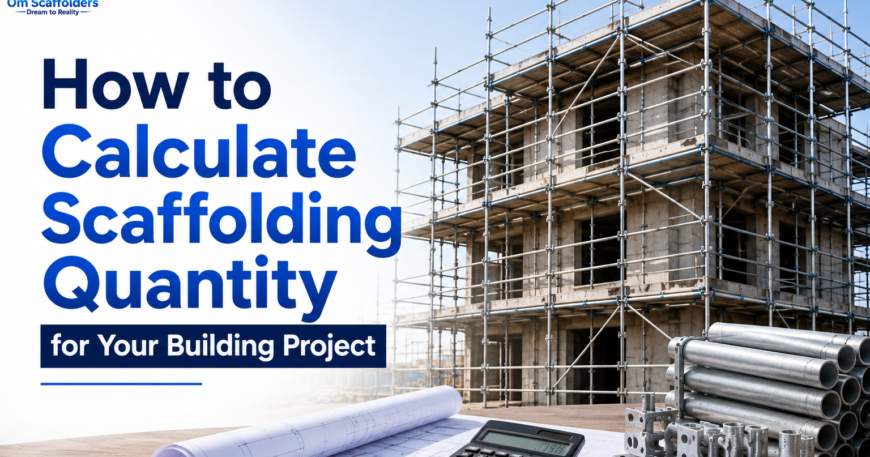
Scaffolding supplies are essential for every construction project. Knowing how to calculate scaffolding quantity helps you save money, plan better, and keep work going when building a house, business, or industrial complex. Ordering too little scaffolding slows construction, and ordering too much might increase costs.
How much is needed depends on building size, scaffolding type, working height, and site conditions. Systematic methods help contractors and engineers estimate how much material they need for safe and productive operations.
Why Scaffolding Quantity Calculation Is Important
The appropriate scaffolding quantity calculation lets project teams know what they need before starting work. Accurate figures reduce waste, simplify budgeting, and aid project planning.
It also helps keep the site safe. As long as there are enough standards, ledgers, braces, and working platforms, the scaffold can be set up according to the plans without having to make any dangerous changes. A good estimate also helps contractors get a solid scaffolding quotation from suppliers, which makes it easier to plan their budgets.
Measure the Building Dimensions
The first step in determining the scaffolding requirement for building projects is measuring the structure. Most of the time, engineers figure out the building’s maximum working height and its total circumference.
For instance, if a building is 100 meters around and 10 meters tall, these are the measurements that are used to predict the size of the scaffold. For structures with balconies, projections, or weird shapes, you may need to complete extra calculations to cover all work areas.
The calculations must be correct because even slight errors can affect how much material is needed.
Calculate the Scaffold Area
Finding the total scaffold area is a popular way of scaffolding quantity calculation is needed. It’s easy to understand:
Scaffold Area = Building Perimeter × Working Height
Using the example above:
100 meters × 10 meters = 1,000 square meters
This picture shows about how much scaffolding is needed around the building. This is what we use to figure out how many scaffolding parts we will need for the job.
This method is often the first step in more detailed planning when learning how to calculate scaffolding quantity.
Consider Scaffold Type and Additional Requirements
Depending on the type of scaffolding requirement for building, building jobs may need a different amount of it overall. Flexible systems, tube-and-coupler scaffolding, and frame scaffolding require various materials.
The estimate should include access towers, staircases, loading platforms, and cantilever portions in addition to the main building. These aspects are typically overlooked while planning, yet they can greatly impact the total amount needed.
Expert providers like OM Scaffolders can assist contractors choose the best scaffolding designs for their projects.
Conclusion
Proper scaffolding estimation is crucial to job planning. By measuring the building, scaffold area, kind of scaffolding, and site conditions, contractors may better estimate scaffolding needs. Know what scaffolding is needed for a building task to reduce waste, expenses, and ensure safety.
Find out how much scaffolding you need without obligation.
FAQs
Q: What is the general formula for figuring out how much scaffolding you need?
A: Most of the time, Scaffold Area = Building Perimeter × Working Height works.
Q: Why is scaffolding quantity calculation important?
A: It helps keep prices down, avoids running out of materials, and makes planning projects better.
Q: What factors affect the scaffolding requirement for building projects?
A: How much is needed depends on the size of the building, the type of scaffolding, the working height, and any other entry structures that are needed.
Q: Should site conditions be considered when estimating scaffolding?
A: Yes. The amount of scaffolding materials that are needed can change depending on the ground conditions, how easy it is to get to, and the form of the building.