

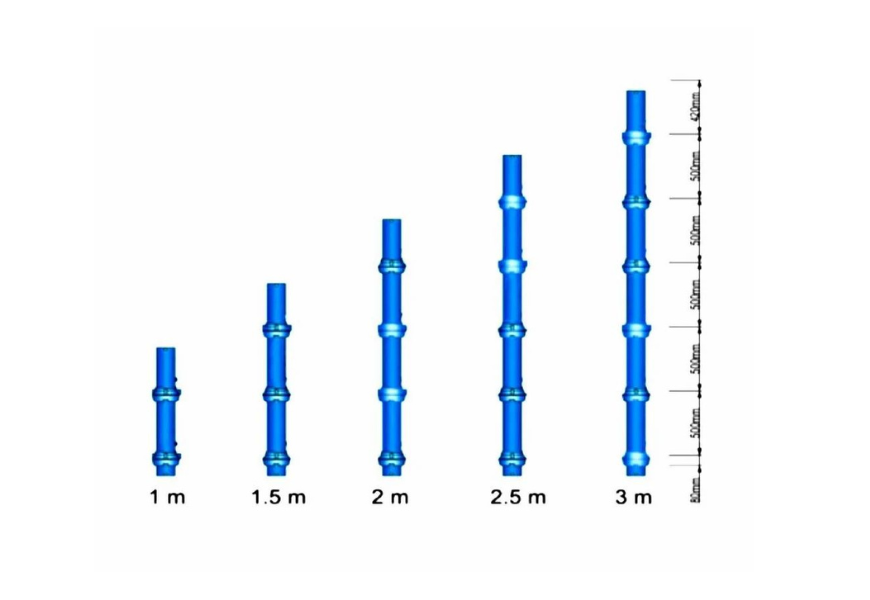
Cuplock is a modular scaffolding system widely used in construction, infrastructure, and industrial projects due to its speed of erection, high load capacity, and simple locking mechanism. It is designed around a unique cup-and-blade node connection, which allows multiple horizontal members to be connected to a vertical standard in a single locking action. Because of its efficiency and strength, Cuplock is commonly used for access scaffolding, slab support, bridge work, and heavy-duty Shuttering & Formwork Solutions applications.
1️⃣ Basic Design Concept
The Cuplock system consists of:
Standards (Vertical Members)
Ledgers (Horizontal Members)
Transoms
Diagonal Braces
Base Jacks / U-Head Jacks
The key feature is the cup joint mechanism:
A fixed bottom cup is welded to the vertical standard.
A movable top cup slides and rotates.
Ledger blades fit into the bottom cup.
The top cup is rotated and hammered down to lock up to 4 components at one node.
👉 One locking action secures four connections simultaneously.
2️⃣ Standard Dimensions (Numeric Facts)
🔹 Vertical Standards
Outside diameter: 48.3 mm
Wall thickness: 3.2 mm – 4.0 mm
Standard lengths: 1.0 m, 1.5 m, 2.0 m, 2.5 m, 3.0 m
Cup spacing: typically 500 mm vertical intervals
The 500 mm node spacing allows flexible connection at multiple lift heights.
🔹 Ledgers
Diameter: 48.3 mm
Blade thickness: approx. 6–8 mm
Common ledger lengths: 0.6 m, 0.9 m, 1.2 m, 1.5 m, 2.0 m
3️⃣ Load Capacity
Cuplock systems are designed for heavy-duty use.
Typical safe working load (SWL) per standard:
30 kN – 60 kN depending on:
Height
Bracing
Base support
Steel grade
For formwork support applications, Cuplock can handle:
Slab loads exceeding 4–6 kN/m² (depending on configuration)
As vertical height increases, load capacity decreases due to buckling risk.
4️⃣ Material Properties
Cuplock components are typically made from:
Mild steel (IS 2062 or equivalent)
Yield strength: approx. 250 MPa
Tensile strength: 410–550 MPa
Galvanized finishes improve corrosion resistance.
This system is designed to handle high load capacities, making it ideal for slab support, beam support, facade access, and large-area scaffolding applications. Its modular nature reduces labour dependency, improves site productivity, and ensures uniform load distribution across the structure. The Cuplock system is preferred for projects where speed, safety, and precision are critical.